Rest for the Rushed pt. 1
Ministries > HopeLives365 with Mark Finley

SUBSCRIBE:
Apple Podcasts
Our minds may not comprehend it, but by faith we believe it. That even in the darkest trauma of life, God is capable in ways we cannot understand that He can bring good out of it.
Mark Finley: My head does not understand it, right? But by faith I believe it. That even in the darkest trauma of life, God is capable in ways that my mind cannot understand to bring good out of it.
Guest (Male): This is Hope Lives 365 with Pastor Mark Finley. Today's message Rest for the Rushed, part one. Enjoy and remember you can always catch up with past messages and stay up to date with Hope Lives 365 and Pastor Mark by going to hopelives365.com. And now Pastor Mark Finley.
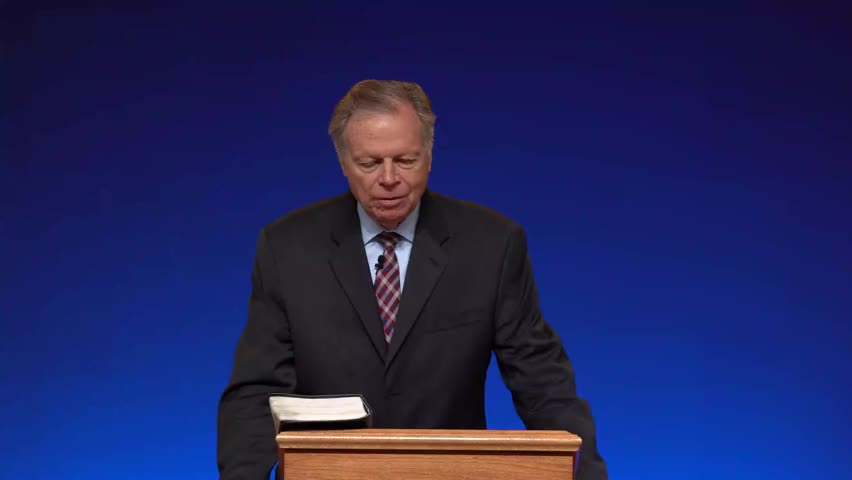
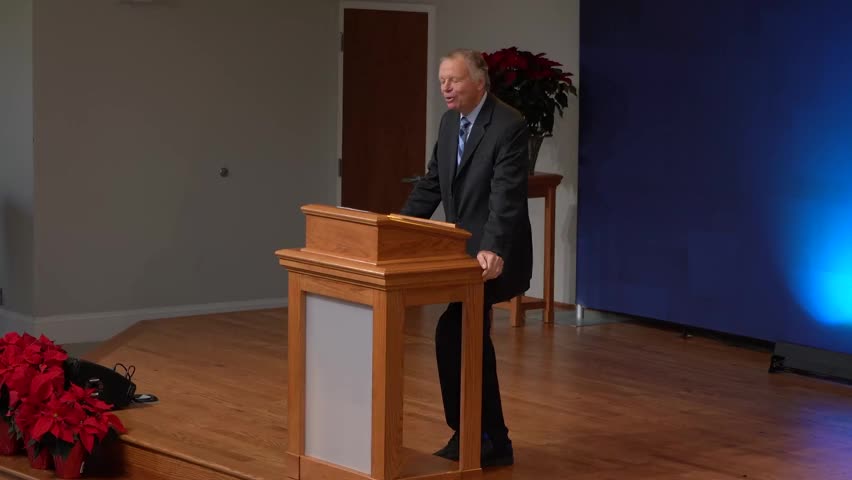
Mark Finley: Stress affects every single one of us. It affects our bodies, it affects our minds, it affects our emotions, and it affects our spiritual life. And tonight we want to share with you basic principles in dealing with the stresses of your life. Rest is a gift given from God that actually restores our emotions, invigorates our minds, and stabilizes our emotions. So rest comes from God. It restores us physically, mentally, and spiritually. When we enter into rest, there is that restoration process that takes place in every area of our beings. Researchers at the University of Warwick and University College in London have discovered that lack of sleep can more than double the risk of death from cardiovascular disease. So if you're burning the candle at both ends, staying up late at night, midnight, 12:30, 1:00 in the morning, pressing yourself at work, stressed out, getting up early in the morning, you're increasing the risk of coronary heart disease. These researchers went on to notice something else about a lack of sleep in health that is extremely significant. Professor Francisco Cappuccio, University of Warwick, noted that short sleep has been shown to be a risk factor not only in heart disease, but in weight gain, hypertension, and type two diabetes. If a person is getting lack of sleep, they're much more likely to eat more, snack more, and gain weight. They're much more likely to be afflicted with hypertension, and they have a higher incidence of type two diabetes. So lack of sleep affects every area of our bodies. Let's take a look at some of the things that sleep difficulties are closely associated with. If you go on the left of the chart, psychiatric disorders. Now this does not mean that these are all caused by lack of sleep. Sometimes psychiatric disorders cause lack of sleep, and sometimes lack of sleep contributes to a poor mental state of mind. But sleep difficulties are associated with the psychiatric disorders of depression, alcoholism, bipolar disorder. People who get lack of sleep are much more likely to have destructive habits in their life like alcoholism. Growth suppression, if you have lack of sleep, particularly in children, it causes growth suppression. The impaired immune system, we'll talk about that a little later. Lack of sleep contributes significantly to a reduction of the immune system's ability to deal with disease. Diabetes type two as well. On the right hand side, if you have lack of sleep, you are more likely to have irritability. One person whom I talked to said, when I sleep too little, I'm like a car speeding down the highway with no brakes emotionally. When I sleep too little, I tend to have my nerves frayed, they tend to be on edge, I tend to be more confrontational. So the research indicates, as we go back to the screen, that sleep difficulties are closely associated with irritability, memory loss. Students who get lack of sleep and study all night do poor on their exams than students who get a good night's sleep. Impaired moral judgment. If you have a major decision to make in your life and you are extremely tired, try not to make that decision. Many decisions are made extremely poorly by people who are sleep deprived. One thing that my wife and I have told our children is that if you've been pushing it hard at school, if you have been working excessively, try to avoid making any major decisions in your life when you're tired and sleep deprived. When you are sleep deprived, your reaction time goes down. That's why studies on truck drivers who have been driving the truck 18 hours a day, pulling over in these little rest stops to stop and sleep a few hours, those studies indicate that when truck drivers are sleep deprived, they are much more likely to have their reaction time down and much more likely to get in an accident. Muscular tremors also come when you are sleep deprived. The risk of heart disease goes up and the risk of obesity certainly increases as well. There are some fascinating studies on sleep in the immune system. Sleep loss impairs immune function and immune challenge alters sleep. In other words, it works both ways. When you get little sleep, you have a immune system deficiency. When you have an immune system deficiency, often it contributes to lack of sleep. There have been some studies done in the research labs on rats and mice, and they researchers have discovered that when you look at rats and mice, there 's a 20% decrease in the white blood cell count after these rats and mice have been sleep deprived. So the white blood cells, of course, are those blood cells in our body that help us to fight infection and disease. You have a 20% decrease. That's extremely significant. You become prone to all kind of infectious diseases and colds. Species that sleep longer in the animal kingdom tend to have higher white blood cell counts. So if you really want to avoid the flu and some of the cold season, if you the less sleep you get, the more you become vulnerable to these infectious diseases. More than 40% of all Americans sleep less than 6 hours a night. So that's dangerous. It 's like living on the edge of the cliff. Well you may be asking the question, what can I do to enhance my sleep? There are what we call sleep enhancers and sleep inhibitors. Let's look at some sleep enhancers. If you want to enhance your sleep, regularity is important. If you go to bed at 9:31 night and 11:30 the next night and 10:30 the next night, the more irregular your sleep patterns are, that is the time of bed you go to sleep, the less likely you are to sleep well. Moderate exercise will help you. Now I don't mean going out and taking a 5 mile jog before you sleep. You're probably not going to do that anyway. But moderate exercise, if you live in a safe neighborhood going out and taking a walk before you sleep. I've walked in country after country after country in the world in the evening. Some people say, what if you're in a dangerous area? If I'm staying in a hotel, I always like to stay on the fifth, sixth, seventh floor if possible, and I walk up the stairs and down the stairs. I've done that 20, 30, 40 times, not vigorously, but just to relax my body before we go to sleep at night. My wife and I in some countries have not felt safe to get out of the parking lot of a hotel, so we've walked around the parking lot once and a twice and a three times and a four time. You know after you do that about 70 times, you are pretty tired or pretty bored, one of the other. So regularity, moderate exercise, a warm bath. I probably take a warm bath 80% of the nights after a lecture tonight. I'll go up and lie in the bathtub, take a warm bath, not a hot bath. It helps you a lot to relax those muscles before going to sleep. A darkened room. If you have light shining in the room, that becomes much more difficulty for your brain to register that it's time to go to sleep. Quietness. Now if you live in a home where you have teenage children and you want to go to bed at 10 and they want to go up to 11 and they've got the music blaring and the TV on, or if you as a wife go to sleep or your husband go to sleep and your wife or husband is up with the TV in the next room, we like to establish basic ground rules in our family. And one is that when one person goes to sleep, the other person respects that by doing something quiet. Doesn't that make sense? Because quietness contributes to it. If you want to sleep well, devotional reading. Often here's my style to help me sleep. Try to get regular sleep as much as I can. Take some moderate exercise, go for a walk, walk up and down the stairs, do something, take the warm bath in a darkened room with quietness. And then often I read the Psalms before going to bed. Psalms like Psalm 46, God is our refuge and strength, a very present help in trouble. Therefore will not we fear that the earth be removed and the mountains be carried into the midst of the sea. And so I'll read the Psalms often. And as I read them, I begin to sense that quietness. And then I pray a little bit and drip drift off to sleep. If you're having trouble sleeping, try following and using some of these sleep enhancers. It'll help you a great deal. Now here are some sleep inhibitors. One sleep inhibitor is a late night meal. If you eat 8:00, 9:00 at night and you go to bed at 9:30, quarter to 10, the blood from your brain is being drawn to your digestion. And that pizza that you just had, you know, with those that heavy cheese, I mean that's rolling in your stomach. And you know, when you sleep, your stomach deserves to sleep too, right? And so if you didn't eat late night meal, that's tough. Caffeinated beverages. If you are drinking coffee or late in the evening or it's a stimulant, Coke, Pepsi, the same, caffeinated beverages are going to tend to keep you up. Late night TV that stimulates you. One of the things that a lot of people try to do is they lie in their bed and watch some TV, thinking that's going to put them to sleep. The the opposite thing actually happens. Late night work. One lady was having difficulty sleeping and we talked about it and she said, oh yeah, I before I go to bed, I spread all my bills out on my bed and I sit there with my checkbook and I'm making out my check because I have to get it done. I couldn't get it done during the week. I mean that's really not a stressful activity paying your bills, right? You think she's going to be able to sleep? What's going on? Her mind is going a million miles an hour as she is making out those bills and then she's thinking before she goes to sleep about all the ones that she didn't pay. So your bed is not your office. You know, you lie in bed, watch TV with those cupcakes and that sugar stuff and drink a Coke or cup of Coke. And pretty soon your mind and your body is you you can't sleep at all. Now there may be some people that have physical factors and I do not minimize the fact that there are hormonal changes, there are certain physical factors, and there may be some council that you need from your physician. So if you are following these principles and you find you still can't sleep, you may want to council with your primary care physician. Stress, anxiety, and tension are probably one of the things that keep people awake more than anything else.
Guest (Male): Will be right back with Pastor Mark Finley. We thank you for listening and hope you're enjoying today's message. Our mission is to attractively present the Christ-centered biblical truths of scripture in a practical, relevant way to people around the world so that they may experience the abundant life that Christ offers and effectively share with confidence his life-changing truths with others. You can support this ministry and help us reach even more by going to hopelives365.com/donate. And now back to Pastor Mark Finley.
Mark Finley: The society we live in is a stress-filled society. People push themselves to the breaking point beyond limits like an elastic band that they pull out that is just ready to snap. And that that elastic band tends to be their nervous system. And they feel like they're ready to snap, ready to crack. Headaches, tightness in the stomach, muscle tremors, working day in and day out. Is stress a good thing or a bad thing? What is stress? How do you define stress? Stress is our physical, mental, emotional, and spiritual response to external stimuli that we face moment by moment every day. It has to do with the wear and tear of life's forces. The only people that do not have stress are dead people. Stress is a matter of life. As long as you live, you are going to experience stress in life. Now is stress good or bad? What do you think? What do you think? Is stress good or bad? Well, let's suppose that I was taking a hike in the forest. And as I rounded a corner, I saw a bear with its cubs. And the bear saw me. And I was between the bear and her cubs. And the bear began to chase me. Immediately my heart begins to beat faster. My blood vessels open wider to pump so that more pump can blood can be pumped through them. My pupils dilate so I can see the tree branches as I'm running and they're flying by. My muscles are like spring steel and I'm running and a bear is chasing me. We call that being under what, everybody? Being under stress. Is stress good or bad? If a bear is chasing you through the woods, are you with me? If a bear is chasing you through the woods, stress is what? Good. But if you get up in the morning and mental bears are chasing you all day and your heart's beating all day, you feel tense all day. Just as somebody said to me one time, you know, Pastor, I wouldn't mind if a bear chased me once in the woods, but when I feel like three bears are chasing me all day, that's what the problem is. Stress can be good or bad. Stress can be good in short bursts to motivate action. But it's damaging to our health if it 's persistent and continue. If I'm a student before I take an exam and I 'm under some stress, that's good because it can motivate me to study. If I get too casual about taking the exam, I may not do well at all. If I'm a violinist and I have a little stress before a concert, that may not be bad at all. If I'm working in a business and there's a problem and I have a little stress to solve it. So if stress is in a short burst, it's okay. But it's this continual heavy laden stress that totally wears you out. Now how can you manage life stress? Now there are some principles. Well these principles of creation health that we've been talking about help us to manage life stress. Exercising regularly will help you to manage the stresses of life. It helps to neutralize some of the negative chemicals that our brains dump into our bodies. So exercising regularly. If you eat a diet high in fiber, Mrs. Finley's whole wheat bread is a stress buster. It's been busting my stress for years. So eat a diet high in fiber and whole grains. Vitamin B complex vitamins are really helpful. Thiamine, riboflavin. Dr. Ray Williams did the early studies in the 1940s and vitamin B complex. What he did interesting out of the Mayo Clinic, Dr. Williams did this. There was a group of nurses working in the hospital that worked together as a team. They had been working together for 10 or 12 years. They functioned adequately as a team. He took half of them and deprived them of vitamin B complex vitamins, particularly thiamine. He took the other group and give gave them adequate thiamine. Within a period of 60 days, these women who could who were working together as a team previously were arguing, they were debating, they were filled with anxiety, intention, they having a difficult time relating as a team doing common tasks in the hospital. He reinforced their diets with thiamine, but vitamin B complex. And I'm not suggesting vitamin supplements in this area. That's not the point at all. My point is that if you eat adequate vitamin B complex, it will help to stabilize the nervous system. It's very helpful. Avoid artificial stimulants. The more caffeinated beverages you use, the more sugar in the diet, the more depletes vitamin B and the more problems you're going to have. Four, use water freely. Drinking adequate amounts of water is going to help to stabilize the nervous system. Shower in the morning, shower in the evening, adequate bathing, taking a swim. If I have been on a lecture circuit and I'm particularly tense, I have access to facilities where I can take a steam bath, extremely helpful. We call this hydrotherapy. Water treatments are very very helpful in relieving stress. You can do it in your own home taking a bath of water. When I help people quit smoking, you know what I tell them? If you feel stressed and you want to take another cigarette, get in the shower. I never found a person smoking in the shower yet. Fifthly, choose a positive attitude. Businessman in Chicago working in one of the Chicago high rises was walking out of his Chicago building with a friend one night. He went to went to buy the newspaper. And the old guy selling the newspapers on the street had been there for 20 years. And this guy had bought newspapers from the same guy for 20 years every night. And the guy selling the newspapers was a real crotchety guy, one of these guys that nothing ever went right in his life. He was negative all the time, negative about the weather. It was either too cold or too hot. It was too snowy or too rainy. Negative about his customers. They didn't give him enough tips. He was the most negative guy. And so the businessman went to buy a newspaper and the guy just spouted off at him, gave him a number of negative comments. And this guy just smiled and said, hey buddy, have a good day. Hope tomorrow goes better. And his friend said, why in the world do you go to that guy to buy newspapers? I would have lashed out at him if he said to me what he said to you. And the businessman John said, I've been buying newspapers from him for 20 years. He hardly ever changes. But I don't let him determine my attitude. I don't let him determine my attitude. You can choose to relate to a positive attitude. Sixth, refocus your thought patterns. You want to deal with stress, refocus your thought patterns. When I'm under a real stressful situation, here's what I do. I say to myself, how important is this? Let's suppose you're having a very heavy confront confrontation with a wife or husband. Now you don't ever have those heavy kind of discussions where a little tension arises and the temperature in the room tends to go up. Or let's suppose it's with a work colleague. Ask yourself this question, how important is this? How will I remember this a week from now? Will I remember this two weeks from now? Will I remember this a month from now? Refocus, refocus, refocus. Refocus the importance, refocus the values, refocus how significant this thing really is. Seven, develop a trusting heart. You know one of the things about reducing stress in our lives is understanding that there's a creator God that made us, a creator God that loves us. I love that old prayer from Augustine centuries ago. Read it with me please from the screen. Lord, our hearts will never find rest until they find rest in you. There is something about sensing that the creator God fashioned us and made us and that we are his. Resting in this loving creator that helps to reduce the stress of our life. Genesis chapter one, verse one. In the beginning, God created the heavens and the earth. You are not a genetic accident. You're not merely skin covering bones. You're not merely chromosomes that are a collection of DNA molecules. When God created you, he fashioned you and shaped you. And the Bible says that God said, let us make man or woman in our image. You were created in the image of God. And the God that named all the stars and every one of the animals. This God cares for you and he loves you. In spite of the stresses and the tension and the worry that we face in life, we can sense that there is a creator God that's interested in us and the details of our lives. This God does not promise that everything will always go well for us in life. There are times that natural disasters take place. We live in a world of good and evil. We live in a world of health and sickness. We live in a world of sorrow and joy. We live in a world of life and death. We live in a world where there's a great controversy between good and evil. But in spite of the tears, in spite of the heartache, in spite of the sorrow, understanding that there's a loving God that created us and fashioned us and made us relieves our stress and our anxiety. Now science scientific research recently is confirming the fact that people who have a strong faith seem to do much better in their overall coping abilities. Let me show you some of the latest research that's coming out. Dr. Herbert Benson from Harvard University has written recently that faith can reduce anxiety and blood pressure. Here's what Dr. Benson said. He said our genetic blueprint has made believing in an infinite absolute part of our nature. We are wired for God. So Dr. Benson in Harvard said, as I study neuroanatomy, as I study the function of the human brain, there's a genetic blueprint that indicates we're wired for God. The psychiatrist Carl Jung, who at the time was an unbeliever, an atheist, looked at human nature. And he said, although I do not believe in God at this time of his life, he said people do better if they act as though God is there. He was speaking from a psychological standpoint. Now now further genetic studies on on further studies on neuroanatomy indicate that in the amygdala of the human brain, there's what we call the spirituality center. So there is this hungering in the heart for God. I remember I celebrated my 21st birthday in the jungles of Brazil. And we were taking an ambulance from the red for the red cross from Belém, Brazil to Fordlândia. And I was 500 miles in the jungle and the ambulance broke down. We're going down a dirt road and the driver went to shift in to um the third gear and he missed the gear and shifted into reverse. And so we stripped all the crankcase out and it was terrible. We're in the middle of the jungle and eventually they had to fly in a helicopter to to help us out. But we were there and this was, you know, in 1965 and we had I was 21 so you figured how old I was, but that's all right. I'm still young at heart. And I'm following the principles of creation health. So you know, I was there with an Indian tribe and we hadn't eaten in three days. And you know, I was 21 at that point in my life. If I didn't eat in a while and I was starving and I was 21 years old, I had never missed too many meals in my life. I was athletic and and we met some Indians from the Krahô tribe. And one of these Indians promised to take me to his village to get something to eat. And so we began to go. One of the things I noted about this Indian tribe is that far from civilization, they had a sense of the creator God. They were never taught that by anybody. But it was built into the fabric of their beings. And that's the way we were made. We were made to trust. We were made to sense that life is more than a joke and a as Shakespeare said, a tale told by an idiot in the sound of fury.
Guest (Male): You've been listening to hopelives365 with Pastor Mark Finley. We hope you've enjoyed today's message and remind you that you can find more in our many ministry resources at hopelives365.com. And you can support this ministry by going to hopelives365.com/donate. And now a final thought from Pastor Mark.
Mark Finley: Philippians 4:6. Let's read it. Be anxious for nothing, but in everything by prayer and supplication with thanksgiving, let your requests be known to God. In other words, stop worrying.
Related Episodes
Rest for the Rushed pt. 2
Thursday, October 15
Living with Hope pt. 2
Tuesday, October 13
Living with Hope pt. 1
Monday, October 12
Related Videos

About HopeLives365
HopeLives365 exists as an international Bible based Christ-centered ministry to give people hope for today, tomorrow and forever. We believe that discovering God’s ultimate plan for our lives brings life’s greatest joy. In a world of uncertainty, God’s Word, rightly understood, brings certainty and assurance. Our ministry will provide you with the resources to live a life of total health-physically, mentally, emotionally and spiritually. If you are interested in improving your physical, mental, emotional and spiritual health there are resources on our HopeLives365 site that will make a positive difference in your life. If you have questions about faith check out our short video clips titled “Truth Still Lives.” If you would like to listen to powerful Biblical Sermons, Pastor Finley’s messages will touch your heart and change your life. If you want material on healthful living, Ernestine Finley’s Natural Lifestyle Cookbook and health related materials will get you on your way to a longer, happier and more fulfilled life. If you have concerns about the future and would like to face tomorrow with greater confidence our presentations on Bible prophecy or one of our Bible Courses are just what you need. The resources on this site are designed with you in mind to enrich your life. It is our desire that they make a powerful difference for you and your family.About Mark Finley
Mark Finley is an international evangelist, television and radio personality, author, teacher, and speaker for the Hope Lives 365 broadcast. He regularly conducts international satellite evangelistic campaigns with tens of thousands in attendance and has spoken in nearly 100 countries. His sermons have been translated into over 50 languages. He has written more than 70 books on Christian living, Bible doctrines, and the prophecies of Daniel and Revelation.Pastor Finley is a faithful student of scripture and proclaimer of Bible truth. He profoundly believes that the Bible is the inspired word of God and provides answers for the deepest questions of life today. His sincerity and love for people shine through each presentation. He and his wife Ernestine have teamed up in Christian ministry for over fifty years. She is known worldwide for teaching Natural Lifestyle Cooking. Continue their Today the Finley’s continue their worldwide ministry at the Living Hope School of Evangelism in Haymarket, Va. and also conduct a Retreat Center for pastors from throughout North America.
Contact HopeLives365 with Mark Finley
Phone:
1-855-888-4673
