The Older Son
Ministries > Leading The Way with Dr. Michael Youssef
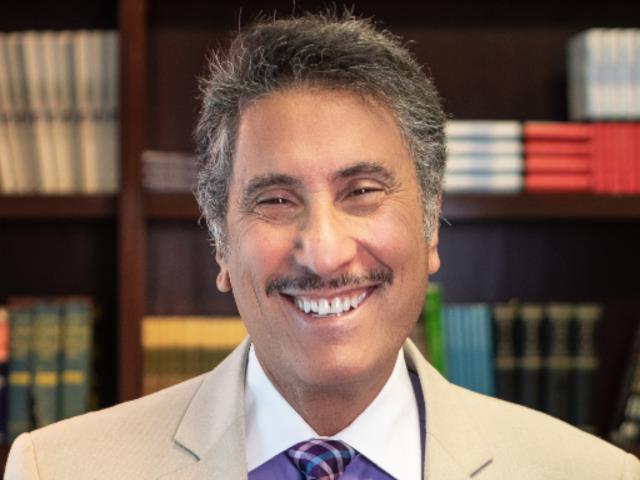
Today on Leading The Way, Dr. Youssef reveals the rebellious and legalistic heart of the older brother in the popular story, The Prodigal Son.
References
Guest (Male): When teaching the parable of the prodigal son, so many pastors and teachers kind of gloss over the fact that the older brother, the one who obediently served his father, was probably just as if not more rebellious than the younger sibling, the one who left home with his inheritance. Coming up next on Leading the Way, internationally Bible teacher and author Dr. Michael Youssef reveals the rebellious and legalistic heart of the older brother, a life lived in rebellion, similar to his younger, far more famous sibling. Oh, thank you. Thank you for being a listener today and hopefully also a supporter of Leading the Way. Please know that God is moving because of your faithfulness. And if you're not yet part of the support team, today is your day. You can impact lives worldwide when you visit ltw.org or better yet, call us. Speak with a ministry representative about ways that you can support the ministry. Call 866 626 43 56. We'll on that later. Right now though, let's listen together to Dr. Michael Youssef.
Dr. Michael Youssef: I'm not going to ask you to raise your hand if you grew up in a legalistic church or in a legalistic home, a legalistic family. Now, in case some of you have not and don't even know what legalistic or legalism means, be patient. I'll explain it to you, but also be thankful that you don't know what it is. I'm going to tell you, but from firsthand experience, but be grateful because legalism really messes you up. Why do you think I'm messed up the way I am? Because legalism is an equal opportunity destroyer. Legalism takes a long time to overcome and you find legalism everywhere. You find it in the traditional churches and you find it in the non-denominational churches. You find legalism in the Catholic churches, in the Protestant churches, in the evangelical churches, fundamental churches. And as I've traveled the world, I've found it in every country, all over the world. By now, some of you who don't know what legalism means or what's about, then you got curious, I am glad because I want to tell you what legalism is all about. Legalism very put simply is the elevation of any man-made rules or tradition to almost or at the same level as the word of God. If you got that, say amen.
Guest (Male): Amen.
Dr. Michael Youssef: See, legalism is the keeping of man-made rule or tradition and thinking that this is what God wants. Legalism is the thinking that keeping of man-made rules or tradition is going to get you favor with God. Legalism in some churches, some of you will know what I'm talking about, is almost and if not quite as important as the word of God. See, the problem with legalism is it mislead you into thinking that if you avoid certain things which are not necessary for salvation, I'm going to show you the contrast in a minute. When you avoid certain things are not necessary for salvation, not sin, not scriptural sin, not biblical sin, I'm talking about things are not necessary for salvation that you're a good Christian. See, that's the messing up of legalism. Listen to me. More than ever, we need to help the younger generation to realize that neither legalism nor using of the grace of God as a license to sin is the answer. The answer is to fall in love with Jesus. The answer is to try to comprehend what it costs Jesus to pay the wages of our sin on that cross. The answer is to try to comprehend the indescribable love of Christ. The answer is to begin to comprehend the debt of gratitude that we have for the Lord Jesus Christ for redeeming us. And that very gratitude is what compels us to live a life of obedience. Not trying to buy God's favor on the one hand nor cheapening the grace of God on the other. As we come today to the older son in Luke 15, in the story which often called the parodical son, and as we've been seeing, it's really more about the father. It's the story about the father. Yes, of course, it's about the two sons, but it's about the father. We've seen that. And I showed you how it is about the father. It's about the two boys, but about the father. Turn with me to Luke 15 beginning verse 25. Now, the younger boy repentant broken before his father comes to confess, repent, turn, and the father forgives him, wash him, cleanse him, put on the robe of righteousness, the ring, and then he has a celebration. The fatted calf is prepared to celebrate his return in thankfulness to God. And right at that moment, the older boy who is in the field comes home. Now, remember again, Jesus is talking to the Pharisees. And they are the super duper legalists. They're the legalists of all legalists. They kept all the rituals, but their hearts was far from God. And that is why you have to understand that when Jesus was speaking about that older brother, he was in effect saying to them, Mr. Pharisee, come over here. Stand right here because Mr. Pharisee, you are that older brother. The older brother is a portrait of you. You are the one who kept all of the external rituals, but your heart is in the far country. You are the one who condemned some sins, but winked at other sins. You are the one who comes across a so sanctimonious, but you dignified unforgiveness and bitterness and gossip and backbiting and smearing the reputation of others with whom you disagree. Listen to me. If we are truly honest, we have to admit that most Christian legalists sympathize with the older brother. Oh, yeah. Listen, we condemn the younger brother. Oh, you know, this this rebellious boy, yes, yes, yes, yes, but we skip that part about the older brother. This growing up, I've never heard a sermon on the older brother. Oh, on the younger brother, on the prodigal son, my good, hundreds of sermons. Every preacher will preach on the prodigal, always. Why? Because while the older brother kept the traditions, he was gritting his teeth. While he took care of all the outward appearances, his heart was far from God. While he went to church, yet he was sour, mean, bitter, and had a loveless heart. No wonder Jesus hated legalism. He really really did. Why? Because legalism gives the impression that you can be saved and accepted by God by just keeping the religious rituals. Beloved, listen to me. Legalism is Satan's theology. Legalism puts Satan in charge of any church. Let me illustrate this from the writing of the Apostle Paul because legalism is as old as the first church. It's as old as the first church. The Apostle Paul writes to the church of the Corinth, okay, Corinthians. And he writes to them. Now, remember the Corinthian church was messed up. I mean, they had so many problems and he deals with them. He doesn't wink at them. He deals with them. But he writes to them and he called them saints. Saints? These people are saints? Yeah. But then he writes to the Galatians. But before he even finishes his greetings, he pulls the shirt off their back. What was their sin? Legalism, legalism. They were adding to the word of God. They were adding to the gospel of Jesus Christ. They were saying, yes, Jesus plus circumcision plus this plus that plus the other thing. Listen to me. The older brother's legalistic heart is clearly manifested in the fact that he could not forgive his repentant brother. Beloved, this is important. Don't miss this. If you miss it, you miss something very important. Don't miss it. If you want to be like your heavenly daddy, you have to forgive like your heavenly daddy. How does your heavenly daddy forgives? We saw in the last message, do not hold sin against the confessing repentant sinner. Don't hold it against them. When we refuse to forgive a repentant person, our relationship with our heavenly father gets strained. And you see it clearly in this story. You can see it so clearly. Hear me out, please. For a Christian believer, forgiving a repentant, confessing and repentant person is not an option. It's not an option because forgiveness is the key that unlocks the handcuffs of hatred and bitterness and envy because forgiveness opens the closed door of unanswered prayers. Because forgiveness lines up your heart with the heart of your heavenly father. Look at the older brother's indignation turned into rage when he heard that his father has done this, turned into rage. Now, you see, you have to understand. You have to understand the Pharisees, particularly that group, not all Jewish people, but that group, the Pharisees, they never believe that their God, the God of Abraham, Isaac and Jacob, their God, the God of Moses and Joshua and Elijah would actually welcome a repentant Gentile. They wouldn't believe that. It's in the scripture. It's in their Old Testament. It's repeated over and over and over again. It's there clearly. But they didn't buy into it. It didn't matter. Why? Because they made a box. They made a box. And that box called the Talmud. That Talmud was the traditions, was the extra biblical material, not the Torah, not the Old Testament. The Talmud was written by the rabbis and interpretations and their ideas and their concept that they just made that box called the Talmud and they put God right into it. And it didn't fit with the way they put God in that box. And we see that clearly when their anger turned into rage on the day we call Good Friday, when they screamed, crucify him, crucify him, crucify him. Here's another thing that's so important. It's so important because it's so dear to the heart of Jesus. It's so dear to the heart of Jesus. I don't want you to miss it. I don't want you to miss it. That's why I'm always pleading with you. Always interpret the scripture by the scripture. Always look at the text in its context, not only in its biblical context, but it's also historical context, in its cultural context because that will give you a real understanding of the scripture. Always look at the cultural context of the day. Another thing that is so important, so important. In the culture of the day, even to this day in the Middle East, but certainly in that day, the culture would have dictated, read it in the Old Testament, the culture would have dictated that the older brother is the one who would have presided over the family celebrations, all family celebrations. The older brother is the chief host of all family banquets. The older son's duty is to welcome the guest regardless of his personality, now whether he's an extrovert or introvert, it made no difference. They didn't take those things into account like we do now. Whether he liked it or not, it made no difference. Whether he enjoyed doing that or not, they didn't think about these things. It's part of what he's called to do. It goes with the territory. It goes with the birth order. It's part of what he does. Let's think with me, please. Just think with me. The older son not only lets his father down by refusing to exercise his responsibility, he actually makes a scene in front of the family home. First, he insults his father by not fulfilling his duty. Then he actually creates an open rupture of his relationship with his father. See, remember God chose Israel to be a light to the nations. God chose Israel to be what?
Guest (Male): Light to the nations.
Dr. Michael Youssef: Don't ever forget that. Don't ever forget that. I always say the gospel, the gospel is in Genesis 12. Did you know that? It's in Genesis 12. God said to Abraham, in you all the families of the earth shall bless themselves. How is that going to happen? The people are going to come to know the God of Abraham and they're going to be blessed. That's the gospel. That's the beginning. That's how we know the gospel. And throughout the Old Testament, prophet after prophet light to the nations, light to the nations, light to the nations. That's what they were called to do. Please hear me right on this one. In the eyes of the father, the older boy's rebellion was just as serious if not more serious as the rebellion of the younger son. Are you with me? Someone would say, oh, Michael, Michael, where did you get that? Where did you get that? I'm glad you challenge me. I always love for you to challenge me. Don't ever hesitate. I want to show you verse 28. Verse 28. The father had to leave the house. He had to leave the guests. Do you know how humiliating that is? He had to leave his guests and go out and entreat his older son. And my beloved friends, listen to me. That was never never never never done in that culture. The father never goes out to entreat the son. The son is the one who entreats the father. The father never pleads with the son. The son pleads with the father. The father never humbles himself before the son. It's the other way around. The son is the one who should humble himself before the father. What's happening here? What's happening? In one day, in one day, please think with me. One single day, the father humbles himself before both sons. He humbles himself before the younger son when he runs. As I told you, it's never done for a dignified man to run. And on the same day, the father humbles himself before the older boy when he came out to entreat his older son. What does that mean? What does it mean? Listen to me, please. Listen to me. It means that God in Christ humbled himself for both Jews and Gentiles. The older boy represents the Jews and the younger represents the Gentiles. The older boy is part of the Old Covenant and the rebellious Gentile, the younger son who's in the far country, far from God. But listen carefully. For you and for me, for us, this means that God in Christ did the unthinkable, that God in Christ did the impossible, that God in Christ did the most unexpected, that God in Christ did the extraordinary, that God in Christ did what no one could fathom. He humbled himself to death, even death upon the cross. For Jews and for Gentiles. And that is why today both my Jewish friends and my Muslim friends find this part of the Christian faith very difficult to accept, very difficult to accept. How can God Almighty, the God, the all powerful God become man and die on a cross? And so they reject the Christ of the cross. Here Jesus was making the point very clear. It's so clear you can't miss it. You can't miss it. For the Jew who stayed home in the Old Covenant, the Old Testament, and for the Gentiles who took all of God's blessings and ignored him and dismissed him, for both of them Christ died. Christ died. Irrespective of the nature of their rebellion, whether their rebellion is an outward rebellion or an inward rebellion, whether their rebellion is false religiosity or rejection altogether, Christ died for their sins regardless of the nature of their sin. That is why salvation is found in no one except Jesus the Christ. There is no name under heaven by which men and women, boys and girls would be saved other than the name of Jesus. And that's precisely why Jesus here in Luke 15, he leaves the ending of the story up in the air as it were. He doesn't tell the end of the story. He leaves it hanging in the air. You noticed that? I know many of you have. He leaves the end of the story hanging in the air. Why? Because the grand finale of this story, I'm getting ready to shout, is found in your open arms that were stretched on the cross. And they were stretched in order that he might welcome repentant sinners. Repentant sinners from every race, from every nation, from every background, from every age, from every stage, from every form of sin. Because the Bible said breaking one sin, breaking one commandment, breaking all of them. You see, we grade sin. Well, this is a big sin, murder. This is a small sin, white lie. Uh, God doesn't grade them. To God, sin is sin. Sin is sin. There's no big sin, small sin, great sin, little sin. And that's why the Bible said we all Can you say that with me? We
Guest (Male): all
Dr. Michael Youssef: How many of us
Guest (Male): all
Dr. Michael Youssef: have sinned and come short of the glory of God? But if you're willing to confess with your mouth, repent from your heart, ask for his forgiveness, you receive that forgiveness. That's his promise. That's his promise. The love of the father for both sons is so clearly indicated here. Our heavenly father loves all. You see, in those days, in ancient times Jews and Gentiles have represented all of humanity. To them, humanity was divided onto only two segments, Jews and then Gentiles. Everybody, that's humanity for them. Both boys represented all of humanity. So the question is is anybody here like the older brother standing on the way from others coming to repentance and faith? Like the older brother keeping the appearance and the facade and never joyfully falling in love with Jesus, sharing him with others. Like the older son seeing people dying every day and going to hell. And you say they're not my problem. I know it's not easy. I know that. Let's do what's not easy. Start with us repenting of our own religiosity and falling in love with Jesus all over again.
Guest (Male): Fall in love with Jesus again. Thank you for taking time for Dr. Michael Youssef. And we invite you to speak one-on-one with a Leading the Way pastor or counselor. Talk about any spiritual questions you may have today. Start that conversation at ltw.org/jesus. Please know that Leading the Way is more than a program on the radio or an audio podcast. God is using many media platforms through Leading the Way to deliver the gospel across six continents. As an example, Leading the Way's digital presence has grown exponentially in recent years and we anticipate even more growth as the team test additional platforms for impact. You see, nowadays digital is more than having an appealing app or website. It really requires maximizing available and growing technologies and on multiple platforms reaching people right where they are. For example, check out Dr. Youssef's AI tool called My Faith Assistant. It's integrated right into the Leading the Way app at ltw.org.
Guest (Male): Check out ltw.org for a tool called My Faith Assistant. Leading the Way is once again leveraging cutting edge technology to bring biblical truth to those who need it most. This powerful digital tool allows seekers and believers alike to ask spiritual questions from doubts to theology and receive clear biblically sound answers rooted in the Bible and the trusted teachings of Dr. Michael Youssef. And it's available anytime, anywhere at myfaithassistant.com.
Guest (Male): This program is brought to you by Leading the Way with Dr. Michael Youssef. Connect further with audio and video content at ltw.org or through your favorite social media platform.
Related Episodes
The Younger Son
Wednesday, October 14
The Father
Tuesday, October 13
An Unholy Alliance II: A Global Discussion
Monday, October 12
Related Videos

About Leading The Way
Along with partners committed to changing the world, Dr. Michael Youssef is leading the way for people living in spiritual darkness to discover the light of Christ. By passionately proclaiming uncompromising Truth through every available form of media, this international team of experts is uniquely providing hope that is revolutionizing lives around the world.
What began as a small local radio ministry in 1988 has grown into an international ministry reaching millions for Christ, including a vast audience in the Muslim world seeking Truth in closed countries. Dr. Youssef's Biblically-based programs are broadcast in more than 28 languages to audiences across six continents. His books, MY Journal magazine, and daily e-devotionals continue to minister to a global audience. Leading The Way utilizes cutting-edge technology to advance the Gospel. Its solar-powered Navigators are reaching into remote villages, and the ministry's KINGDOM SAT TV channel—launched by Dr. Youssef in 2009—is reaching into the Middle East with programming in English, Arabic, and French. Field Teams follow up with viewers, including those in restricted areas, to lead the lost to Christ, disciple new believers, and support the underground Church.
Dr. Youssef and the Leading The Way team are committed to proclaiming the Good News of Jesus with the lost and equipping believers to grow in Christ. Learn how you can partner with this unique ministry today.
About Dr. Michael Youssef
Michael A. Youssef, Ph.D., is the Founder and President of Leading The Way with Dr. Michael Youssef, a worldwide ministry that leads the way for people living in spiritual darkness to discover the light of Christ through the creative use of media and on-the-ground teams. His Biblically-based teaching programs are broadcast more than 18,000 times per week in multiple languages around the world. He is also the Founding Rector of Church of the Apostles in Atlanta, Georgia, and founder of the AWAKE America prayer movement.
Dr. Youssef was born in Egypt and lived in Lebanon and Australia before coming to the United States. In 1984, he fulfilled a childhood dream of becoming an American citizen. Dr. Youssef holds theological degrees from Moore College and Fuller Theological Seminary and a doctorate in cultural anthropology from Emory University. He has authored more than 50 books, including popular titles Saving Christianity?, Life-Changing Prayers, Is the End Near?, How to Read the Bible, Heaven Awaits, and God’s Final Call. He and his wife reside in Atlanta and have four grown children and 15 grandchildren.
Contact Leading The Way with Dr. Michael Youssef
Mailing Address
Leading The Way
P.O. Box 20100
Telephone:
(404) 841-0100
Toll-free line
(800) 337-5323
