Unlock Your Child's Learning Potential with the 8 Types of Intelligence I
Ministries > Focus on the Family with Jim Daly

What if your child’s biggest challenge is actually their greatest strength? Dr. Kathy Koch [COOK] explores how every child is uniquely wired with different "smarts." Learn how to identify your child’s natural strengths, stop unintentionally paralyzing their "smarts," and nurture who God made them to be.
Guest (Male): I feel like I blinked and now my newborn can walk and talk. Kids change so fast, don't they? It can be hard to keep up with each new phase. That's why I love Focus on the Family's Age and Stage newsletter. Each week, I get an email with resources curated by experts. They're full of biblically and clinically based tips tailored to your child, no matter what age they are. You can sign up today at mykidsage.com. That's mykidsage.com.
Guest (Male): The following program is sponsored by Focus on the Family and is supported by the prayers and financial gifts of wonderful friends like you.
John Fuller: This is John Fuller, and please remember to let us know how you're listening to these programs on a podcast, app, or website.
Dr. Kathy Koch: So we don't need to say things like, "How did the other kids do?" And we don't need to say things like, "Well, your brother..." No, you're a standalone individual created in the image of God for His glory, and these are the things that you're able to do really well.
John Fuller: I wonder if you've ever had a child ask, "Mom, Dad, am I smart?" How do you answer that question? It really makes a big difference, and we're going to talk about ways to appropriately respond to her today on Focus on the Family with Jim Daly. This is going to be a fascinating conversation about raising children who understand their identity in Christ. Thanks for joining us. I'm John Fuller.
Jim Daly: John, I love this idea that children are born with a bent. What does that mean? That's for parents to figure out. They like to talk, they don't like to talk, they think more than they speak, etc. And it starts to show pretty early. I'm amazed at how early it does show up. I think our guest is going to say that might be not exactly the right question. It's more like, "What smarts do I have?" maybe, because I think Kathy Koch is really into identifying the smarts that every child has. But there's different categories, and that's a great blessing to know that you're in a good place as a parent, that your children can grow up confident and thinking, "Okay, I've got two or three of eight smart types," and that's what we're going to talk about today. Psalm 139:13-14 says, "For you formed my inner parts; you knitted me together in my mother's womb. I praise you, for I am fearfully and wonderfully made." Isn't that great? Fearfully and wonderfully made. The Lord tells the prophet Jeremiah that, "Before I formed you in the womb, I knew you." And so it goes in scripture. God knows you. He knows everything about you. And today we're going to talk about how to identify as a parent those great smarts that each child has.
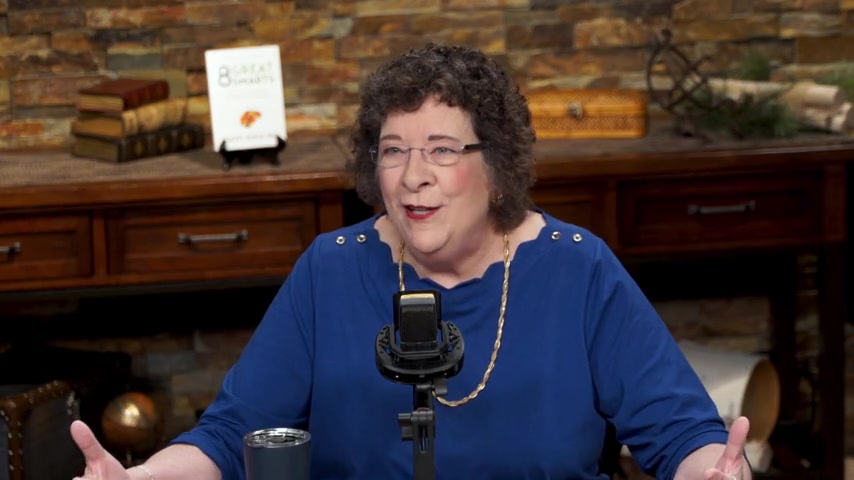
John Fuller: And Dr. Kathy Koch has been studying this topic of intelligence for a number of years, more than 30 years, I think. She's a speaker, author, researcher, and the founder of Celebrate Kids, a ministry dedicated to equipping parents and caregivers and the body of Christ to help children feel seen and heard. Always a popular guest here, Dr. Kathy's book is called *8 Great Smarts: Discover and Nurture Your Child's Intelligences*, and of course, we have copies of that book here.
Jim Daly: Kathy, welcome back to Focus on the Family.
Dr. Kathy Koch: I am so glad to be here, Jim. Thank you.
Jim Daly: Now you know people love hearing from you. You do know this, don't you? People just love your insights, and you're right up there. I love Kevin Leman with the birth order book, or Gary Chapman with the love languages. You're right in there now. I mean, you've identified something that I think the Lord has anointed and really blessed in being able to identify your kids' geniuses or smartness. I'm not sure what the right grammatical thing is there. But in the opening talking about that question, so inevitably just about every child comes home from school, maybe didn't get the best grade on a spelling bee. It starts early. And the child says to mom and dad, "Am I smart?" What do you say?
Dr. Kathy Koch: Well, depending upon the situation, "Of course you are," is a great response. Sometimes I would say, "Hey, of course you are because God made you smart. God doesn't make stupid people." I like to tell children that stupid is their choice. I would be careful about using the word stupid, so our listeners can decide whether or not their kids can handle the infamous S-word. But God makes people capable of being smart. It's all based on the decisions we make and the worldview that we root those in, which is why we would believe in a biblical Christian worldview being so important. So the question today is not, "Am I smart?" or even, "Well, how smart am I?" which is bully playground language from our era. "I'm smarter than you are." We either said it or we heard it. That was a pretty common thing. But today I'm so excited that the question is, "Well, how am I smart?" and then, "Why did God make me this way?" Like, what a gift to give young children and teenagers an idea that God chose this for them and there's a reason for it.
Jim Daly: Yeah. I think this is fair, the understanding that we can develop in the ways that we're smart and how it affects our identity. You think about that. I mean, if you speak a little differently, people think you're not very bright even though you could be incredibly bright. I think it was Edison that had a hearing issue and they thought he was underperforming in school? I mean, the guy that eventually became one of the greatest inventors of all time. But there's an example of a handicap causing people around him to think... I think they went to his mom and said, "He's really not a very bright student." Edison.
Dr. Kathy Koch: Right. They were wrong.
Jim Daly: Yeah. Right. But I mean, what a great picture of what you're trying to say. There can be a lot of things. And you also speak to that idea of identity.
Dr. Kathy Koch: Oh, we teach about it all the time, Jim. Identity controls behavior. Who I think I am is who I will be. And if our children don't think they're smart, then they think God skipped them in the assembly line. And of course, He doesn't have an assembly line approach. As you read from the scripture to start the show, He knits us together, which is a precise skill. He's very careful at that and unique. He chooses us to be who we are. And to know that in our knowing is just different for kids to go, "Hey, I'm picture smart, my brother's logic smart, but I'm smart too in a different way, and God wants me to be smart this way."
Jim Daly: And we're going to hit all of that. Let's hit the smarts. Let's list them and then we're going to begin to go through them. So what are the eight smarts?
Dr. Kathy Koch: Yeah, we have all eight, which is God's generosity, right? So we're word smart: we think with words. When we're being logic smart: we think with questions. When we're being picture smart: we think with our eyes, in visuals. When we are being music smart: we think with rhythms and melodies. When we are being body smart: we think with movement and touch. When we're being nature smart: we think with patterns. When we're being people smart: we think with other people. And when we're being self smart: we think deeply inside of ourselves. And we have all eight. The capacity for all eight.
Jim Daly: So you can function in any of them, I would think.
Dr. Kathy Koch: Yes. And you know what's amazing that you said that? We can choose to go to that part of the brain. If I walk into a Sunday School class and I know that I'm going to need to be thinking with words and thinking with questions, I can choose to go into that space and shut off the visual imagination if I feel like it would help me. We have some power there.
Jim Daly: You know, in our parenting role, this is the one thing I hear from all the parenting experts is you have to know your child. That's a big word, to know your child. It's this thing: how do they learn, how do they express their smarts? And you need to be a student of your child to really know them.
Dr. Kathy Koch: Oh, please. Absolutely. You know what, Jim? God knows us. God knew us before He formed us. So we are drawn to people who know us. If you want to have influence over your children, know them, because they will come to you; otherwise, they're going to go to an AI chatbot because they believe the lie that they're known there. Know them. Talk their language. Welcome them into your world and allow them to be successful and then acknowledge that they've pleased the Lord and that they've pleased you, and they're going to want to spend time with you. And that changes everything. Grandparents, parents, older siblings, teachers can do this too. Sunday School teachers can do this too.
Jim Daly: Well, and I think as parents we're busy and we can easily justify, "I got a lot on my plate." But it really is kind of the core ingredient is loving and knowing your child. That's like job one for all of us. I'm singing all your tunes.
Dr. Kathy Koch: You're doing such a great job. And liking our children. Children tell me on a regular basis, "Dr. Kathy, they have to love me. They don't have a choice." Which is kind of true, but then they'll say, "But I wish they would like me." And they feel liked when we hang out with them. They feel liked when we say, "Hey, do you want to shoot hoops?" They feel liked when we say, "Hey, do you want to play checkers again? It was so much fun last night." When we come in their direction, they feel valued, and that again changes everything.
Jim Daly: All right, coming back to the list. Word smart, it's first. You are a word person. Maybe that's why it's first, but describe word smart and what is it?
Dr. Kathy Koch: Yeah. Word smart people think with words. So they read, write, speak, and listen. And the reason it's first is that it's what I call a school smart. It's not the most important smart; however, in traditional schooling and often in a Sunday School church setting, what do we do? We read, write, speak, and listen. So these children who have been gifted by God with brain cells in that part of the brain are going to feel smarter than others and school is a safer place for them to be. So these are the readers, writers, speakers, and listeners. They're not afraid of writing papers, they're not afraid of reading out loud, for the most part.
Jim Daly: No, I so appreciate that. You know, I'm thinking of how these psychological tests all kind of collide. And of course, you have a PhD, but I look at, I think it was the DISC tests, D-I-S-C, and I think it was that one, but it described your approach. Like, if you're a verbal person, one of the things that really caught my attention with that is it said when I'm under pressure, I can lean into verbal attack because I'm a verbal person. And isn't it interesting how all these things kind of orbit the same truth of God's word? I mean, they're identifying the way God has created us and the limitations we experience in this life with personality. We're all unique, but we all kind of have core emotions like that. So a verbal person, one of the downsides of them is the way they fight their way out of a bag is by verbal attack because that's my asset, that's my sword.
Dr. Kathy Koch: Right. You know what? We misbehave with our strengths. Like, I think our weaknesses concern us, and for parents and grandparents who are listening, the children's weaknesses concern us and we're on our knees, and I pray we do that. But their strengths drive us nuts because too much of a good thing isn't a good thing. So too much talking, "Would you just go away?" And if I would have been raised that way, I wouldn't be here on the radio with you today. So we have to see that, "Oh, this is a strength to develop, not a problem to eliminate." And that's a powerful choice that parents have.
Jim Daly: And it's hard to. I can remember being five years old, I said this last time we were together, and Penny, my mom's best friend, Penny Mitchell, and I remember she said to me, "Man, you've got diarrhea of the mouth." And it crushed me to where I just didn't talk the rest of the day. I thought, "Okay, that's a bad thing. I'm talking too much as a five-year-old." And I overcame it and I didn't have to go to counseling for it, so I don't want to be too much on Penny. I was just talking too much. But speak to that general concept of a word smart child who is going to be perceived as talking too much.
Dr. Kathy Koch: Exactly. And I mean, that was unnecessary for her to say it that way. I understand what she was trying to say. I've taught parents to say that their ears are full. "My ears are full. I can't handle this right now." And one little five-year-old said, "Well, Mom, just tip your head over and just knock the words will fall out." That's a word smart kid! But the point is that really for all of the eight, anything well done is badly done. But those again, my people, I was a Chatterbox Kathy from the time I was about three years old. I loved a thesaurus when I was a kid. People think that that's crazy, but I was even back then interested in words. I've now written nine books using a thesaurus. Childhood causes adulthood. Look who you've become and what you're doing. Today comes before tomorrow. And my parents, though they saw all the words in me as a strength to develop. So they taught my brother and myself to listen. They taught me to not overwhelm with words because you know what? Satan, if I can go here, guys, Satan wants our strengths for his kingdom. So those of us who are word smart, we can gossip, tease, name call, demand the last word, impress with all that we know, lie and not get caught, and then Satan wins. If that would become my reputation, my ministry would be done. So to be the parent who challenges children with biblical character to have respect for yourself and for others and to have self-control, and so you learn to not speak even though you want to and you learn to listen well; otherwise, the gift that God's given you becomes a liability. And then parents say, "Don't, don't, don't," like this woman who called it out, and then you don't, and then God loses and you lose because you don't get the joy of serving through the gift that was chosen for you.
Jim Daly: I must say, I think it only lasted an afternoon that I didn't talk. I overcame it quickly. Went right back to talking. But again, it's that thing of being a good parent, a healthy parent and knowing how to interact with your child.
John Fuller: This is Focus on the Family with Jim Daly and our guest today is Dr. Kathy Koch, and we're covering some of the content in one of her books called *8 Great Smarts: Discover and Nurture Your Child's Intelligences*. It is a terrific resource. Every parent should have a copy. Get yours today from us here at the ministry when you stop by focusonthefamily.com/broadcast.
Jim Daly: Kathy, the second smart you highlight is logic smart. Now, what person doesn't want to be known as logic smart? We all do because it's so vaulted in the culture. Unlogical! Avoid emotion. This is Spock from Star Trek. I'm a walking computer, I'm so logical. But speak to that smart and what does it look like?
Dr. Kathy Koch: Right. It's so fun. These are the people who think with questions and they love it when things make sense. So they tend to gravitate toward math because math makes sense. Not everybody might agree, but it's logical. 2+2 is always 4, and 22+22 is always 44. And logic smart children and adults tend to gravitate toward science because they love to discover the truth. In fact, highly logical people would rather discover truth than be taught truth. So when you say to a kid, "Don't touch that," they're like, "Oh, what's going to happen? This is going to be so cool." And they touch it and complain and then you yell because they touched it, but they were logic... well, you wouldn't yell because you're a Christian. But the kids are like, "No, I just had to know what would happen if I touched it." So logic smart kids love to discover truth, they love it when the world makes sense. They like probably science and math. They like discovering. So scripture's complex for them. And the fact that Jesus went to the cross for them, like, "Why would he have done that? I didn't even know him or ask him to." That's overwhelming. Spelling, you guys know this, spelling isn't my strength. I still write books and I've earned a PhD, but the English language makes no sense. So for someone who's logic smart like I am, the fact that the 'e' at the end of the word doesn't make the first vowel long is somewhat overwhelming. Or my last name spelled K-O-C-H, which we pronounce Koch. That's just bizarre, which is why I go by Dr. Kathy professionally. And knife and quicksand is slow, by the way. I mean, the English language is bizarre. So logic smart children see that the reason that we might struggle with something is how we're smart. So if you struggle with spelling, it might be because you're smart in a logic smart way and you get quickly irritated by that. And so it's not that you're dumb, you're actually smart in a particular way. And let me just add too, Jim, the only reason it's number two on the way that I present them in my book is that it also is a school smart, because what do we do all day in school? We ask and answer questions, and science and math are obviously important disciplines.
Jim Daly: Let me ask you this distinction with the logic smart child. When you start talking about a little deeper things, depending upon their age, but the truth of God's word, that He is truth, they would probably struggle a little bit with that concept. Like, "How do we know that? I know 2+2 is 4, but how do I know the Bible is true?"
Dr. Kathy Koch: Exactly. Yeah, they're going to probably have more doubts. So don't become irritated with the logic child. You need to think through how you're going to parent that differently. Come on. I mean, what a compliment that they've admitted to you that they're confused. Like, if you're a Christ follower and the most important thing for you is that your children know, love, serve, glorify God, and they're confused, but they come to you, praise the Lord that they're safe with you. "Daddy, I don't understand." So you use cross-referencing and you look at the same concept in all four of the gospels and you have the children's pastor on speed dial, perhaps. And you do what you can do to find out how you can explain truth to a seven-year-old and you just hang in there. And you say, "You know, son, there'll be a day when I believe you're going to understand in your spirit," because the Holy Spirit's role is to teach, convict, and comfort us, where it's going to be really, really hard. I came to faith in Christ for wisdom. Most people come to faith in Christ for love. I'm an introvert from a really close family. Colossians 2:3 was my victory verse, that in Christ is hidden all wisdom and knowledge. My pastor, to God be the glory, figured out I wasn't looking for love. Now, once I trusted Christ, I knew the depth of His love, but that wasn't the appeal for me because I thought I had enough. What I wanted was answers to my questions. And he, praise God, didn't dismiss me, didn't slap my hand, but hung out with me and showed me that I was looking for the same God others were looking for, and I was coming to it with a different pathway. And you might have a kid like that. So then you say, "Hey, God is wise, God knows all things, and hang out with Him and He'll teach you all things."
Jim Daly: Yeah. You know, as a parent, you can sometimes not see clearly where the bent of your child might be in these eight that we're talking about. I remember Trent when he got his license. He actually waited until 17. And I remember I put the curfew on him. If you're going to be out, you're home by midnight because nothing good happens after midnight. This is how you know you have a logic-driven child. And he goes, "Do you have empirical data that supports that?"
Dr. Kathy Koch: Did he really?
Jim Daly: That's hysterical! That's exactly what he said. And I went, "Yeah, me. When I was 16, I shouldn't have stayed out after midnight." But isn't that true? I mean, that's an example of where you need to tune in because that's the filter in which he was like, "Prove it to me."
Dr. Kathy Koch: Oh, that's so good. Yeah, how do you know that? And then this is where we say, "Son, please trust me because I've lived longer than you and I know more than you." And he wasn't being a smart aleck. He was being a scientist. Like, "Where'd you get that data?" Isn't that funny?
Jim Daly: Oh, it is. But it's so true. Can I ask a question, Jim? Has that shown up in his whole life?
Jim Daly: Oh, yeah. He's doing his masters in biochemistry right now.
Dr. Kathy Koch: Bingo. See? And if you would have handled that badly, he might have been afraid of questions and afraid of data even and he wouldn't be doing what he's doing.
Jim Daly: No. I mean, it's been fun to watch that whole logic thing develop. I mean, he's into all the logic.
John Fuller: You talked in the book related to the logic smart child how it's important for us as parents to foster in them a respect for others and a kind of a self-respect. Why is that important and how do we do that practically?
Dr. Kathy Koch: Oh, thanks for asking that. So a respect for others matters greatly because maybe there's somebody who's not ready to handle that question or that answer and we know that intuitively so we don't put them in a position where they're going to feel dumb. Or maybe there's somebody we're with who's very logic smart like we are and they want to figure it out on their own. So we let them discover it so they have that joy of getting the answer right before we gave the answer away. Self-respect is, "I know who I am and I'm going to be that to the glory of God." So I'm going to search for truth and I'm going to search for answers and I'm going to be excited that God made me this way without being prideful. Those would be some of the quick answers. I think respect for others because we live in community. Respect for myself so that I use the strengths for good and not bad. You know, John, logic smart people can either blow up a chem lab or they can prevent the chem lab from being blown up. Logic smart people can solve problems, but I know they can also create problems for other people to solve, and that's a very fine line. And when parents ask their children to be smart with their smarts, they're going to grow into that life. You teach character through the scripture, through the model of your life, through the words that you teach, and through correcting. We have to say to our children, "That was sin. I'm so disappointed in your choice." We have to call it out and say, "Here's a better way for you to have handled that."
Jim Daly: Yeah. That's so good. I want to ask you this one. I actually did a wedding the other day and officiated it. I think I've done four here in Colorado. It was an honor, and the groom's father came up to me and I was complimenting him on his son, he's just a great guy, you can see it. And he said, "Well, my pastor taught me to raise character, not to raise characters." And I thought, "What a great line!" to raise character. And that's my question. When you're looking at all these smarts and as a parent you're trying to develop their character as well, is that unique when you look at the smarts and how you go about developing character? Because character sounds pretty set: that you're truthful, that you're loving, that you're kind, that you hopefully are developing the heart of God as you're growing up. And as a parent you want to see that. Is that different with the logic kid and the word smart kid and how do we... yeah. So speak to that.
Dr. Kathy Koch: No, that's really a good question. So if I was raising a word smart child, I would speak the truth and I might sit down and go for a donut date maybe, go for a just go out and talk and walk in the park and talk it out and explain it and define it. And don't be short of patience with doing that. That's the point. You got to know your child needs to hear this from you and interact with you this way because we can be kind of like, "Can we get this done? It's five minutes." Oh, totally. But you know what, you guys? Character's the hardest thing we'll ever teach because it goes against the sin nature. So we have to hang in there. And when you know the smarts, you know how to teach. So with logic smart, questions and answers, cause effect. "If you said that, what do you think would happen? You know, if you stole that donut and you did get away with it and you ate it before anyone knew that you had done it, how do you think you'd feel? So would you really want to do that?" If somebody is picture smart, you would help them maybe draw the best answer, etc. So I do think the smarts give us specific language through which we can embrace our kids, which makes it just easier. And it also helps us figure out who we are, so we're modeling to be good, if you will.
Jim Daly: Picture smart, you mentioned it. Let's cover that one as well. What is picture smart? So we have word smart, we have logic smart, now we have picture smart.
Dr. Kathy Koch: Right. And now the order doesn't matter. Those were the first two because of the school connection. Picture smart kids and adults think with visuals in their mind. They have a vivid imagination usually. If I say that there's a duck in the lake, they can see it before they can actually see the duck in the lake. They think with their eyes and they also think with the pictures on paper. They'll doodle and they'll draw and they'll turn the page and see the picture before they see the words on the page. They might remember how something looks by the shape and the design and by the color. So they're interested in art, they're interested in creativity and design. History is probably one of their strengths because they remember what they're reading. They see what they're reading. Bible also. In fact, these are the children who tell me they know what God looks like because they've seen Him when they pray. Which is beautiful.
Jim Daly: Yeah, it's so good though. Yeah, you just have to have that imagination as a parent, which is great to think about how you communicate with each child.
Dr. Kathy Koch: And to remember, Jim, that they're not created in our image. They're created in God's. Really like, as an example... that kind of hurt. I don't know why I felt that night, but I did. And they will become much like you because you're influencing them. But as an example, I'm not very picture smart. So if I had a daughter, "Mommy, Mommy, God showed me what to do," I'd be like, "No, He doesn't do that." Well, He doesn't do it for me because I'm word smart and logic smart, so God communicates to me through the written word and through the voice, if you will, and the scripture. But yeah, if I had a kid and that kid was picture smart, that would be because God has a sense of humor and He would want me to develop an ability I don't naturally have, and then I would say to my kid, "Tell me what God showed you."
Jim Daly: So let's say, and I'm sure genetics can play into this, but I'm thinking of the engineer and the accountant mom and dad. God help them. And they have the picture smart kid. I mean, you've got to think about, "How do I relate to this kid who's thinking in pictures and I think in numbers?" What's some advice for that parent to be able to communicate with that picture smart kid when you're coming from that background?
Dr. Kathy Koch: Real compassionate question. First, we can remember we have all eight. We have the capacity for all eight. We usually have a few that are stronger and a few that we don't use easily. But these parents do have the picture smart ability. In fact, engineering is picture smart. My dad was a gifted engineer and he could hang, no joke, he could hang a picture above the couch exactly in the middle without measuring. Jean told me that's impossible. No, with the right kind of mind, it's possible. And his particular job as an engineer was very much based on the picture smart part of his mind. So I would want parents to not assume they can't relate. And then we say to our kid, "Hey, explain that longer. Give me more information so I can relate to what it is that you're struggling with or that I can relate to the joy that you're expressing, because I don't see the world the way you see it. God's made you uniquely beautiful for our family. Tell me more."
Jim Daly: That's so good. Kathy, we're going to come back next time and cover more of the eight. So let's do that. Today's been great. It's been insightful. I hope you're connected with it. I'm certainly connected with the content. And I appreciate it. Thanks for all the research. Man, the fact that you did a PhD in this so you could be here now talking about it, that's awesome! And it's a wonderful resource that you've created, *8 Great Smarts*, and this is something unique. And if you can make a gift of any amount, if you could do it monthly that helps us tremendously, a one-time gift as well. Send it and we'll send you a copy of the book as our way of saying thank you.
John Fuller: Donate today, get your book when you call 800-232-6459. That's 800, the letter 'A' and the word 'family'. Or stop by our website, focusonthefamily.com/broadcast.
Jim Daly: You know, John, it's so important for people to understand the mechanism of what we're talking about. People send a check to Focus on the Family, it's done and... and I'll meet some of those folks obviously when I'm on the road traveling and I'll express my thanks to them. But I want this testimony to be yours because you're helping Focus do the work. I mean, we're here doing the hands and feet of it, but you make it happen. Let me read this to you. It was a note from Kim, and she was going through some difficulties in her marriage and this is what she wrote: "Thanks to your resources, encouragement, and biblical teaching our marriage is growing stronger every day. I'm deeply grateful for how Focus on the Family," let me just say *you*, "have supported us on this journey. I also recommend your shows to friends who could benefit from the wisdom and encouragement *you* provide. I'm honored to be a monthly supporter of your ministry helping marriages, strengthening families, standing for adoption, protecting the unborn, and supporting those in abusive situations. Your ministry, our ministry, has truly made a lasting difference in my life and marriage." Isn't that great? I mean, and thank the Lord for Kim who caught it and actually is now kind of paying it forward, right? And making sure other people can benefit from the resources here at Focus. Okay, Dr. Kathy, we'll come back next time and keep it rolling. Can we do it?
Dr. Kathy Koch: Let's do it for sure. Okay.
John Fuller: And we hope you'll plan to join us as well. Thanks for listening to today's episode of Focus on the Family with Jim Daly. I'm John Fuller inviting you back as we continue the conversation with Dr. Kathy and once again help you and your family thrive in Christ.
Related Episodes
Fortifying Your Marriage for the Storms of Life
Saturday, August 15
The Proof You Need to Believe in Jesus Christ – II
Wednesday, August 12
Related Videos
About Focus on the Family
We want to help your family thrive! The Focus on the Family program offers real-life, Bible-based insights for everyday families. Help for marriage and parenting from families who are in the trenches with you. Focus on the Family is hosted by Jim Daly and John Fuller.About Jim Daly
Jim Daly
Jim Daly is President of Focus on the Family. His personal story from orphan to head of an international Christian organization dedicated to helping families thrive demonstrates — as he says — "that no matter how torn up the road has already been, or how pothole-infested it may look ahead, nothing — nothing — is impossible for God."
Daly is author of two books, Finding Home and Stronger. He is also a regular panelist for The Washington Post/Newsweek blog “On Faith.”
Keep up with Daly at www.JimDalyBlog.com.
John Fuller
John Fuller is vice president of Focus on the Family's Audio and New Media division, leading the team that creates and produces more than a dozen different audio programs.
John joined Focus on the Family in 1991 and began co-hosting the daily Focus on the Family radio program in 2001.
John also serves on the board of the National Religious Broadcasters.
Contact Focus on the Family with Jim Daly
Mailing Address
Focus on the Family
8605 Explorer Dr.
Colorado Springs, CO
80920-1051
Toll-free Number
(800) A-FAMILY (232-6459)
