Unlock Your Child's Learning Potential with the 8 Types of Intelligence II
Ministries > Focus on the Family with Jim Daly

What if your child’s biggest challenge is actually their greatest strength? Dr. Kathy Koch [COOK] explores how every child is uniquely wired with different "smarts." Learn how to identify your child’s natural strengths, stop unintentionally paralyzing their "smarts," and nurture who God made them to be.
Guest (Female): I feel like I blinked and now my newborn can walk and talk. Kids change so fast, don't they? It can be hard to keep up with each new phase. That's why I love Focus on the Family's Age and Stage newsletter. Each week, I get an email with resources curated by experts. They're full of biblically and clinically based tips tailored to your child, no matter what age they are. You can sign up today at MyKidsAge.com. That's MyKidsAge.com.
John Fuller: The following program is sponsored by Focus on the Family and is supported by the prayers and financial gifts of wonderful friends like you. This is John Fuller. Please remember to let us know how you're listening to these programs on a podcast, app, or website.
Dr. Kathy Cook: Their strength drives us nuts because too much of a good thing isn't a good thing. Too much talking, would you just go away? If I would have been raised that way, I wouldn't be here on the radio with you today. We have to see that this is a strength to develop, not a problem to eliminate. That's a powerful choice that parents have.
John Fuller: That's Dr. Kathy Cook describing some practical ways you can nurture your child in unique ways he or she is smart. You're going to want to stick around for the rest of the story as we continue an insightful conversation today on Focus on the Family with Jim Daly. I'm John Fuller.
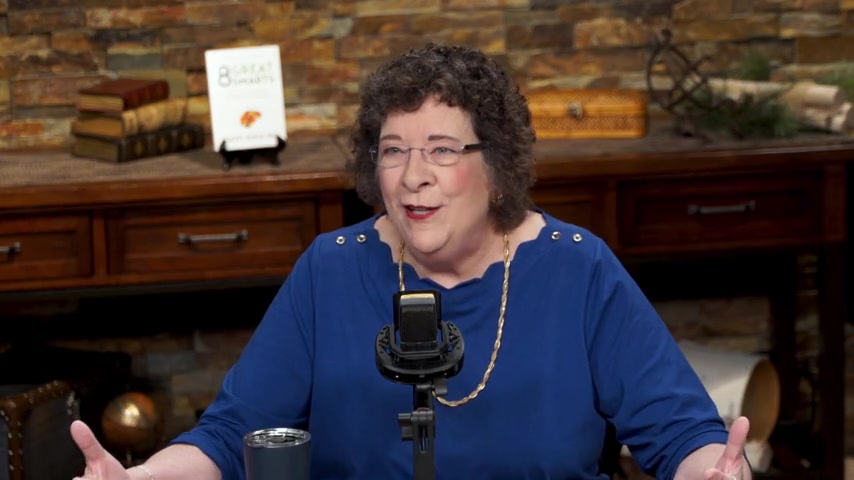
Jim Daly: We had a fascinating conversation last time with Dr. Kathy about her book, *8 Great Smarts*. You probably fit a couple of them very dramatically, maybe one very specifically. You'll just need to go back and listen to that if you didn't hear it. You can get the audio download from the website, or better yet, you can go to YouTube or the broadcast app. It's got everything there. You can listen to thousands of programs, but Kathy's will be there today and you can listen to her last time and today.
John Fuller: Dr. Kathy Cook is always a favorite with our audience. She's a speaker, author, researcher, podcaster, and she founded a great organization called Celebrate Kids. As you said, we're covering some of the content in her book, *8 Great Smarts*. Stop by our website to get a copy.
Jim Daly: Dr. Kathy, welcome back.
Dr. Kathy Cook: Thank you. I'm so happy to be here. Thank you for your support.
Jim Daly: I enjoy talking with you because you love kids. I love kids. Kids are hilarious. They're so blunt. They're just out there, especially things like different hair color, different skin color. They just say it. They haven't developed a filter like we have. Sometimes you've got to be ready as a parent. Then you start saying things like, "We don't say that to people." I just had an experience that was so funny. We covered last time the word smart child, the picture smart child, the logic smart child, and it was good. It's one of those concepts that you can really latch into. It's like I mentioned last time, like Kevin Leman with the birth order book. It may not fit 100%, but there are spiritual insights that somebody like you or Kevin Leman or Gary Chapman hit on. Once you expose it to the rest of us, we're going, "Oh my goodness, she's absolutely right."
Dr. Kathy Cook: I love that. I do think this is visible. You can see this. You can see it in yourself and you can see it in kids, which does make it really fun.
Jim Daly: How do we manage patience with children's smarts when we don't align with that smart? I think that really does drive some parents a little to impatience.
Dr. Kathy Cook: It's totally understandable. It's not about us. It's about them. You chose to have children or you chose to be a teacher. We love them well by letting them be who they are with boundaries, which are blessings when love is the goal. If you have a word smart kid, it doesn't mean let them talk forever. There needs to be obedience, there needs to be blessings, but we offer input and instruction so that they can be smart with their smarts, not that they would have the smarts diminished in them.
Jim Daly: So often as parents, we say to ourselves, "I wish I could have a do-over," especially when the kids are young and we lack patience to do the right thing. We get angry, we have an outburst. Hopefully, that's it and there's no physical issues or something like that. But in the normal parenting, how do we get ahead of that? I know so many people having children right now. It's awesome. I'd love to be able to have them tap into this discussion. As a parent, how do you not have those regrets? How do you do it well the first time? What would you say to a 28-year-old young mom who's got a new child, or maybe a three-year-old? How do I not make those mistakes?
Dr. Kathy Cook: There's a big part of me that wants to say you will make those mistakes. That's fair. It's how you respond to them that really matters.
Jim Daly: What do you concentrate on as a new parent to make sure that you minimize those mistakes?
Dr. Kathy Cook: Raising the children you were given, not the children you wish you had. Making sure that if you have a picture smart child, you ask about her vivid imagination and you spend a lot of money on paper and watercolor. You be okay with that.
Jim Daly: What if they color the walls? That's the problem.
Dr. Kathy Cook: Maybe you do. Maybe you say, "This is your wall." If your child can handle the fact that this is your wall but this isn't your wall, let them color on the wall. It's just a wall and you can paint it. But if it's disobedience, then the child has a consequence, which would include that the child gets to repaint the wall. So there is a consequence for the choice, but we expect them to be smart with their smarts. We honor who God's created them to be and we want to give them opportunities to be successful. We do let them fingerpaint, but we do it outside and they're wearing clothes that we don't care if they get messy. We believe that God was smart to make our children this way and that it's our privilege and responsibility to nurture them up in the way that they've been created to be. Believe that your picture smart children will be art teachers or historians or great Bible scholars because they can see it come alive in their mind and they teach with such vivid language that everybody in their church is like, "That was the best message ever." Believe that God's done something powerful for your kids and don't get in the way. If you're in the way, apologize, ask to be forgiven, get yourself some help, know who you are, celebrate that, don't lust after somebody else's smarts. I could go on and on. This is why I wrote the book, to give people hope that they can get it right because it's complicated. Kids are complex.
Jim Daly: This is a little tongue-in-cheek, but it's actually true. When our boys were young, they were out on the sidewalk painting with chalk. Guess who came to pay a visit? The HOA president. "We don't allow chalk painting." My kids are like five and three. I'm going, "Totally wrong." Anyway, roll with the punches, find a way to let your kids express themselves appropriately.
Dr. Kathy Cook: This is our chance for us to say no, we will obey our rulers. That's biblical. That's a great way to handle it. Then we find the backyard cement where they can't be seen, or we go to the park to swing on the swingset, but we take our bucket of sidewalk chalk and we leave really cool messages on the sidewalk like, "God loves you" and "Have you noticed the daisies in the corner?" Then the next kids who come get blessed by that.
Jim Daly: For the new listeners today and viewers, let's hit the eight topically. Let's hit them and then we'll pick up descriptions on the latter end.
Dr. Kathy Cook: Everybody has the capacity for all eight. I want to say that because God's a generous God. Word smart people think with words. Logic smart people think with questions. Picture smart people think with their eyes, with visuals. Music smart people think with rhythms and melodies. Body smart people with movement and touch. Nature smart people with patterns. People smart people with other people. Self smart people think deeply inside of themselves with reflection.
Jim Daly: This is going to be good. I'm looking forward to covering hopefully all of them if we can, but certainly most of them. Music smart, you mentioned that one. I am not music smart. I am tone deaf. I don't have it.
Dr. Kathy Cook: It's okay to say that that's number seven or eight for me if I were to make a list, because to think that we have all eight to the max would be arrogant and that's not appropriate. Those of us who do have music smart brain cells, we think with rhythms and melodies. We make music when we're excited, so we whistle, toe-tap, bebop. We might choose a church for the quality of the worship and we might spend a lot of our free time and our money on music. These are kids who will go to the nursery when they're two and they'll find the glockenspiel. Those are kids asking for piano lessons when they're six. You can look at what they enjoy in their free time and that's going to show you maybe what they're going to grow up and become.
Jim Daly: I remember Troy and I, I only went to his piano lesson once and it was like eight weeks in. The piano instructor says, "Let's play the key of G. If you don't know where it's at, ask your parent." I'm sitting on the bench with him and Troy's looking at me like, "Where's G?" I'm going, "Troy, I'm so sorry, I haven't a clue." I had to wave to the teacher and have her come over. I felt stupid.
Dr. Kathy Cook: I am so sorry again. She didn't need to do that to you.
Jim Daly: Well, but I needed somebody to tell him where G was. Anyway, but that's part of it. It's hard for me again as a parent to think that my child could be music smart. It's so out of my orbit. I'm not even sure how to relate to that.
Dr. Kathy Cook: I appreciate you bringing that up because there is research that suggests that the earlier the smarts are awakened, the greater the likelihood they're a strength for a lifetime. Normally it would be that the parent would be modeling something that the child would want to become. My parents were both music smart, so Dave and I developed music smart ability early on in our lives. In your case, you're right, you didn't model that for your son so it's surprising to you. But I think if you don't give a kid piano lessons, you won't know if God created that kid to be music smart. Again, created in God's image, not ours. It's 100% wired into us by God and nurtured into children by God's people. God's in charge of all of it, whether it's through the DNA, the creative intent God has when he makes us us, and then the experiences. You could take a kid to a concert and they could be like, "I want to play the piano, Dad. That was the most amazing thing I've ever heard." Then he's eight and you start piano lessons because he went to the symphony and he heard this guy on this big black massive piano go crazy nuts. Your kid is like, "That was the most beautiful thing I've ever heard."
Jim Daly: Interesting, I read some brain research that said before six years old, you develop tone ability and foreign language. If you're exposed before age six, you'll pick up foreign languages quicker. Isn't that interesting?
Dr. Kathy Cook: The brain is amazing.
Jim Daly: All right, body smart. Now you can make so much fun of this one. What is a body smart smart?
Dr. Kathy Cook: These are the movers and shakers. You're body smart, Jim, in that you talk with your hands and I've watched you lean back and lean forward. I talk with my hands. If I put my hands in my pocket, they'll be there for like 10 seconds when I'm giving a speech. Body smart people think with movement and touch. We might be athletic, we might be in drama. We can make our whole body look angry even though we're not. We can pour a glass of milk and not spill. We are the surgeons who will get the body back together right, the chiropractor who keeps the person's body on the table. The drummer versus the flute player.
Jim Daly: So dexterity plays a role?
Dr. Kathy Cook: Dexterity would be part of it. We turn every chair into a rocking chair. If you're raising a body smart kid, buy him a clipboard and let him study his spelling words walking in the backyard. Let him swing on the swing set when he's memorizing a poem and that body smartness is going to enhance the ability to learn. It seems foreign to us because it might not work for us, but again, it might be the kid that you were given.
Jim Daly: In that context, there's been many articles talking about over-prescription on ADHD, ADD. I would think this plays into that. Body smart people can be very active and irritating if I could say it that way. Parents, from what I understand from the literature, a lot of parents are over-prescribing with their physicians things to control body expression. How do you feel about that?
Dr. Kathy Cook: Can I be brave here? I think in many cases we are medicating out of children the greatest channel God's given them through which they can embrace life.
Jim Daly: What a beautiful way to look at that. But again, it requires patience on the parent's part.
Dr. Kathy Cook: And the proper diagnosis, the proper pediatrician, the proper exam of food and food dyes and sleep patterns and all kinds of things. If children have been gifted by God to be body smart, you'll know it early on. They need, as everyone else does, self-control, self-respect, and respect for others. I teach children that even if you're the most body smart kid in the class, you're not allowed to move if it makes it hard for the teacher to teach and hard for the other students to learn. You can choose to control yourself. I write about this in the book. A child who drums their fingers on the table, which is a combination of maybe music smart and body smart, and they like it, it actually calms them down. It might give them energy, but it's bothering everybody else. You can teach that child to take their fingers and do it on their thigh under the desk. I'll say to kids, "It's not as satisfying because it doesn't make noise, but it's not about you being happy all the time. It's about you learning to live in community." Learning to live in community starts in the family. It's not a question of how do I get that to stop. It's how do I redirect all that energy to something less offensive. That's doable. But again, it takes instruction, not punishment. It takes compassion and empathy and love and a choice.
Jim Daly: I love your emphasis on patience, absolutely.
John Fuller: That's really good advice. Our guest today on Focus on the Family with Jim Daly is Dr. Kathy Cook. We're talking about some of the content in her wonderful book called *8 Great Smarts: Discover and Nurture Your Child's Intelligences*. Of course, we have that here at the ministry. Just stop by FocusOnTheFamily.com/broadcast. Dr. Kathy, what does it look like to be nature smart? This one I'm a little lost on as well.
Dr. Kathy Cook: These kids think with patterns, and so do the adults. They know that it's not a bluejay, it's a bluebird because they remember where the blue goes on the body or the wing of the bird. They might know the names of the clouds. I travel every week on an airplane. You'd think I'd know the names of the clouds. I don't. I'm not terribly nature smart, although I'm word smart. My vocabulary for nature is weaker. Nature smart kids would rather be outdoors than indoors. They'll do better in biology than they will in chemistry. They'll do better in earth science than they will in physics. They want to sit outside at a restaurant. They love to get dirty. They dig in the dirt and they'll run the pet store at the mall and they'll be dog walkers when they're 14 earning money for church camp in the summer.
Jim Daly: I hadn't even thought about it in terms of those patterns that we see and watching snowflakes or something.
Dr. Kathy Cook: Exactly. The nature smart kid looks out the window and is distracted by that and talks to the dog more than they talk to the mom.
John Fuller: What are some ways then, Dr. Kathy, that we can foster that child who just longs to be outdoors? Maybe my lifestyle right now and ours as a family doesn't allow for so much time outdoors.
Dr. Kathy Cook: I appreciate that question. Maybe we're living in an apartment and it's not safe to be out at a park. But you can go to the park as a family. You can walk through a botanical garden for free in most cities. You can go to a garden shop and buy a tulip or a geranium and plant it and it's on the windowsill of your child's bedroom. You could ask for a zoo membership for Christmas rather than another toy that a week later they'll forget they have in the closet. Again, we can do this. We're born with the capacity for all eight, but they do have to be awakened. It's the activities and the games and the books and the conversations that will do that.
John Fuller: My wife is definitely a nature smart person. I like the outdoors, but we spent so many summers camping to the point where at one point one of our daughters said, "Do we have to do this again? I'm so tired of camping." I think what I hear you saying is give them opportunities and you'll find out.
Dr. Kathy Cook: Yes. Do they gravitate toward that or not? If we never give them the opportunity for camping or piano lessons, we won't know and they won't know where their gifts might lie.
Jim Daly: This idea of people smart, that's intriguing to me. I would assume that would be things like they can read a room pretty quickly. They know the people. They see behind the eyes of that person. But children actually have that capacity?
Dr. Kathy Cook: Yes, sir. I think this is the most important smart because it's how they know who is safe for them. They can walk into a room and go, "I'm going to sit there" or "I'm going to avoid that person." These are the kids who, your sons when they were young, they walked up to you and they wanted you to say yes, but you had no written all over your face so they turned away. Then you're like, "Can I help you?" and the kid is like, "No." You're like, "I have time now" and the kid is like, "I don't care" because they want a yes. It's a really important skill. It's been awakened later because of the pandemic and masking and eyes down on devices and we don't ask our kids to look up and say please and thank you.
Jim Daly: Let's go a little slower on that because this is critical. What you're saying is that the years of COVID muted that ability to develop people smarts.
Dr. Kathy Cook: It's a great verb that you use. It's never too late, but we have to understand that we have children from a certain age group, five to 10 years old now maybe, that were raised in that and we need to help them. We need to get their eyes off of their devices so that they can look up and go, "That person's happy, that person's sad, that person's mad." Otherwise, they won't know who's for them. The other thing that's so powerful about being people smart and you two gentlemen are so good at this, it is interacting with people to develop truth. It's collaborating, networking. These are kids who can debate without arguing. They can persuade and convince without bullying. This is a very, very important skill. We want and we want our kids to be able to, as an example, talk about Jesus Christ without making people mad. That's people smart. I would teach it early and I would teach it often.
Jim Daly: How do you, and I want to make sure we hear this clearly, in teaching a people smart child not to manipulate? Because you kind of put the dark end of this is their ability to manipulate is quite high versus the ability to use their people smart for good. Again, just talk about it in that context and then for the parent who's now troubled that they can outsmart the parent.
Dr. Kathy Cook: Definitely. That's very unfortunate. All of the eight have a dark side, which I do write about in the book. People smart kids can manipulate. I've asked children and young adults how many of you can get your mom to say yes when she should have said no. All the hands go up and then they laugh. Then I say, "Don't ever be proud again of doing something you shouldn't have done that you can do." I can do that as the outside stranger. But so can the mom. The mom can say, now that they're listening to this broadcast, the mom and the dad can say, "Hey, we're going to listen to this together. I want you to hear from the expert. We're going to train you to use your ability for good and not evil. So you can be full of grace more readily than somebody else, but we're not going to let you manipulate anymore." This is where the mom stands up for herself and has respect and says to the child, "No, we're not going there. I said no, already answered, go to bed." We can do that and we can make sure that our kids know that you have a talent and a gift that God's chosen for you. Praise God. Don't use it the way you're using it.
Jim Daly: Last, we did get through these, self smart, which I do want to pause on this one because it's really intriguing to me. I think it's a little less clear, the self smart one. What does that world look like for the self smart child?
Dr. Kathy Cook: Although it's last, it's not least important. Just something has to be last. Self smart people think deeply inside of themselves. They've never heard an easy question. Even, "What do you want for lunch?" "Well, I saw that Mom has ham in there, but I had it yesterday. I don't know, I wonder what we're having for dinner. That might help me decide." Seriously, every question can require a complex analysis and it needs to feel right. So they need patience and they tell me they're slow. These are the children who tell me they're stupid because they're thinking deeply. So it's quite opposite. They need quiet, peace, privacy, and space. Many of them tell me, "But I share a bedroom and my dad looks under the mattress and my mom empties the backpack." They're your kid. But let them go out on the porch swing and think something through. If you do family devotions, start it out and share the message for the night and share your worship song and pray. Then give them all a question and let everybody in the family separate for four minutes. You can go to wherever you want as long as you are within the sound of the bell and when the bell rings, come back. Everybody will benefit from that, but the self smart kids are like, "Oh cool," because now they can think without you staring at them while they're thinking, which drives them absolutely nuts. Peace, quiet, privacy, space to encourage them to know that you're not slow, you're a deep thinker. It'll change them and understand the thing that's hard. A lot of self smart people, their joy is knowing and so they're not likely to share with the church, the community, the school, or the mom and dad what they know, which is sad because they tend to know very, very good things and we must encourage them to share.
Jim Daly: That makes sense. I'm just thinking about that because I think I have one who is that in terms of the bent. Like you said, you're all of this, but what sprouts out as a tendency or a more predictable pattern. I'm thinking of Lee Strobel, who we had on the broadcast, the author of *Case for Christ*. He was an atheist journalist and he encouraged me to ask the boys a question and the listeners to ask their teen/twenty-somethings a question. It was: If Jesus had to answer a question immediately, what question would you ask him? It does a lot. The way you frame that, it's an immediacy thing. It boils it down to what is *the* question you would ask God. I was having lunch with Trent and Troy and I asked this. It's so funny because their bents came out. Trent, the biochemistry guy, I said it to him and Trent says, "Give me 20 minutes and I'll have an answer." I'm talking like on the mark at 20 minutes. He goes, "Okay, I've got my answer." "Okay, what is it?" He goes, "I'd like to know what element are we missing that's right in front of us that God used to create the universe." I went, "Wow, okay, that's good." Troy immediately said, "I'd ask him why we suffer." This is my scientist and my philosopher theologian. I would encourage parents to do that because I think it fits here, Kathy, with your information. I think it gives you an insight into where your kids are at age-appropriate levels, but I think it's wonderful and starts moving you in that direction. Let me ask you this right at the end here. It's been wonderful as always to have you on, always good energy and I'm hopeful the parents listening are benefiting and going, "Aha, oh!" writing a note on your phone. Got to talk to my husband tonight about that one. But right at the end, we spent the last two days exploring the different ways we're smart and this applies to us too as parents. Know thyself, right? What are some things you hope our audience takes away from this conversation?
Dr. Kathy Cook: Additional belief that God has been good to them to make them how he's made them and that their children were strategically and intentionally created to be who they are for his glory and for this family. We are imperfectly perfect for each other and we need to walk in that reality. I hope that there are adults who are realizing maybe they've not stretched themselves in ways that they could. I know of people who hear me speak and go back to college because they realize that they can do something that they've always wanted to do but thought they couldn't do. Just a little encouragement. If you're not terribly word and logic, you don't think you're designed for school, but you absolutely are. Plus you do have word and logic, you just have to choose to go there. Maybe we've encouraged people to not look down on themselves but to realize that they're smart too. Smart is a power word. It's a good word. When we think we're smart, we study. If you don't think you're smart, you don't bother studying because you don't think it'll help. So it's just fascinating. So I pray for very strong encouragement and I pray that there'll be practical conversations that people will choose to have as you've directed us beautifully to have.
Jim Daly: It's such an amazing thing that God invites us into be part of the gospel. Such a privilege, right? We have to be there. We're that part of the ingredient and the Holy Spirit comes with his ingredient and the Lord moves. But it takes that care of an adult or a person in someone's life to make a difference. Well, Dr. Kathy, it's been good, so good.
Dr. Kathy Cook: I'm so grateful to be here, guys. Thank you so much. Always good wisdom and insight from you.
Jim Daly: Your wonderful book, *8 Great Smarts: Discover and Nurture Your Child's Intelligences*, not one but some part of all eight. You can get a copy of this great book. Be in ministry with us. Mend a marriage, help a parent do a better job, save a baby's life. That happens each and every day here at Focus and we can make it fun. You get a great resource if you do that monthly. That helps us tremendously. A one-time gift as well. But we'll send you Kathy's book as our way of saying thank you for being part of the ministry and helping others. It really is a resource that will revolutionize your approach to identity and intelligence. It's that good and we're so thankful for friends like you who support the ministry. Our research shows that over the last 12 months, our joint efforts together have helped more than 80,000 parents work through a significant crisis in their parenting. That's a huge impact for families. 80,000 people just in the past year helping them through that marital crisis.
John Fuller: That's generational impact and that's all because folks come alongside and support us, pray for this ministry and that's why we're inviting you today to donate generously. Our number is 800-A-FAMILY or donate and get Dr. Kathy's book, *8 Great Smarts*, when you stop by FocusOnTheFamily.com/broadcast. When you get in touch, ask about our age and stage emails. This is a great thing. Dr. Kathy, so what we did finally is create a mechanism in which parents can sign their kids up by birthday on the website and we send information every week about parenting tips for the two-year-old or the five-year-old all the way up to 18.
Dr. Kathy Cook: I love it. I've done some of the videos for them. I think that's a brilliant idea.
Jim Daly: You've contributed and I'm excited about it. We have about 200,000 people that are in it now and I want millions of parents to be able to tap that information. It's absolutely free. Just sign up and we'll send you that every week.
John Fuller: You'll find all the details about our free age and stage e-newsletter at the website and you can also get your copy of Dr. Kathy's terrific book, *8 Great Smarts*, when you stop by FocusOnTheFamily.com/broadcast. Coming up on Monday, Tim Shoemaker and his son Mark join us to offer practical ways that you can have conversations with your teens.
Guest (Male): You want to make your home a really welcome place for your kids to have their friends over and then you get to see what they're like and be the carpooling mom or dad.
John Fuller: On behalf of the entire team, thanks for joining us today for Focus on the Family with Jim Daly. I'm John Fuller, inviting you back as we once again help you and your family thrive in Christ.
Related Episodes
Fortifying Your Marriage for the Storms of Life
Saturday, August 15
Unlock Your Child's Learning Potential with the 8 Types of Intelligence I
Thursday, August 13
The Proof You Need to Believe in Jesus Christ – II
Wednesday, August 12
Related Videos

About Focus on the Family
We want to help your family thrive! The Focus on the Family program offers real-life, Bible-based insights for everyday families. Help for marriage and parenting from families who are in the trenches with you. Focus on the Family is hosted by Jim Daly and John Fuller.About Jim Daly
Jim Daly
Jim Daly is President of Focus on the Family. His personal story from orphan to head of an international Christian organization dedicated to helping families thrive demonstrates — as he says — "that no matter how torn up the road has already been, or how pothole-infested it may look ahead, nothing — nothing — is impossible for God."
Daly is author of two books, Finding Home and Stronger. He is also a regular panelist for The Washington Post/Newsweek blog “On Faith.”
Keep up with Daly at www.JimDalyBlog.com.
John Fuller
John Fuller is vice president of Focus on the Family's Audio and New Media division, leading the team that creates and produces more than a dozen different audio programs.
John joined Focus on the Family in 1991 and began co-hosting the daily Focus on the Family radio program in 2001.
John also serves on the board of the National Religious Broadcasters.
Contact Focus on the Family with Jim Daly
Mailing Address
Focus on the Family
8605 Explorer Dr.
Colorado Springs, CO
80920-1051
Toll-free Number
(800) A-FAMILY (232-6459)
